Life doesn't stay in one lane, and your home shouldn't either. The room that's an office by morning might need to become a homework zone by afternoon and a quiet spot to unwind by evening. The good

Dated: August 7 2026
Views: 14
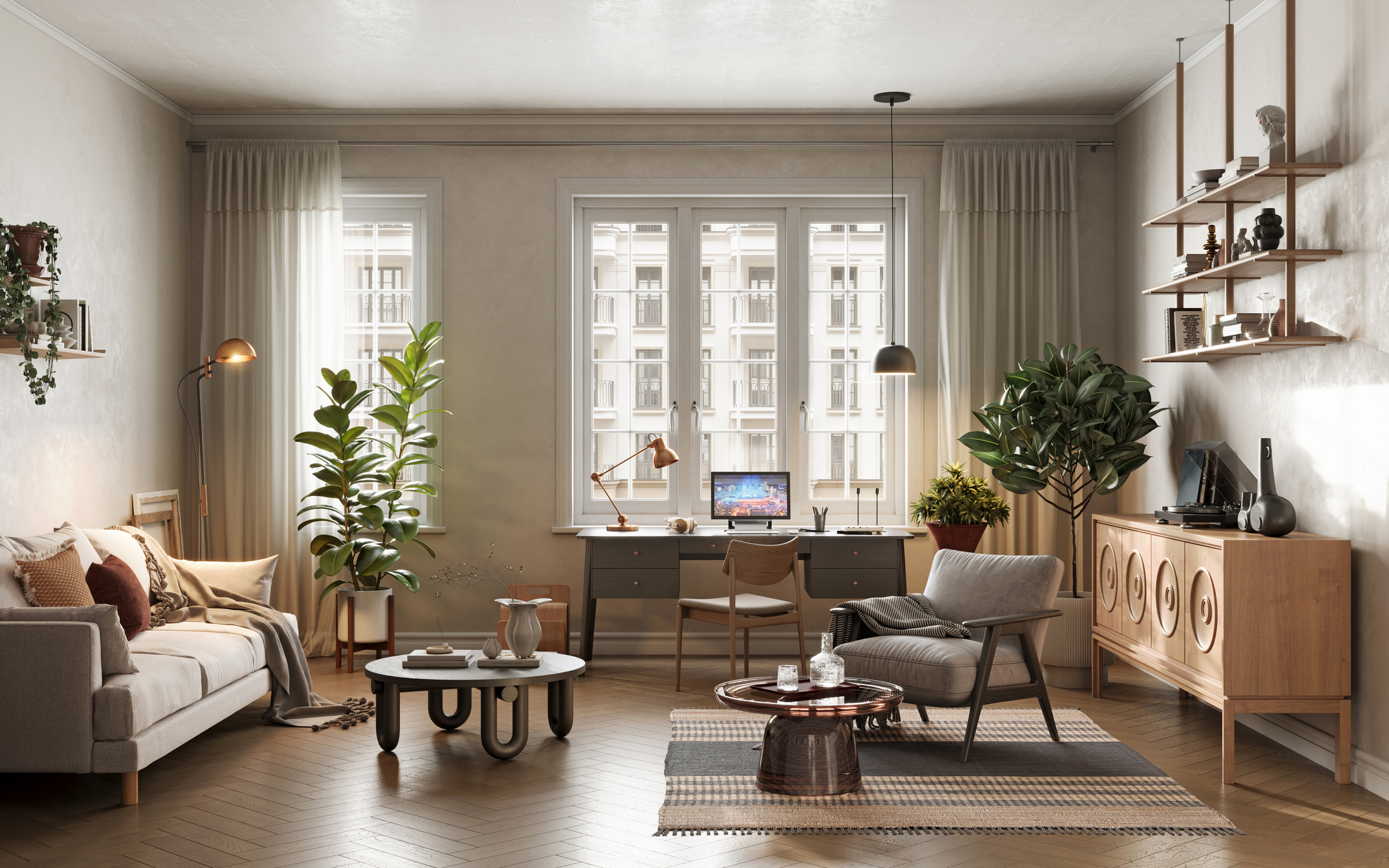 Life doesn't stay in one lane, and your home shouldn't either. The room that's an office by morning might need to become a homework zone by afternoon and a quiet spot to unwind by evening. The good news is that with a little intention, a space can shift between these roles without ever feeling chaotic or half finished. Here's how to design rooms that adapt as easily as your day does.
Think in zones, not walls
You don't need a renovation to make a room more flexible. Instead of building walls, build zones. A rug, a lighting choice, or the way you angle a piece of furniture can quietly define an area without boxing it in.
A desk turned toward a window can anchor a workspace, while a sectional nearby signals it's time to relax. The trick is keeping the transitions soft. One color palette throughout, with small shifts in tone or texture, lets each zone feel distinct while still belonging to the same room.
Let furniture pull double duty
Adaptable pieces are what make a flexible room actually work day to day.
Furniture with casters or a lighter frame makes it easy to shift the room when its purpose changes.
Layer your lighting
Lighting does more to set the mood of a room than almost anything else, and a multi-use space needs options.
Smart lighting makes this effortless. One tap and the room shifts from productive to playful to calm.
Keep storage smart, not just stashed
Clutter is what breaks a flexible room. Mixing open and closed storage keeps things both functional and good to look at. Open shelving gives you a place for the personal touches. Closed storage keeps everything else out of sight until the room needs to reset.
A few ideas that work well:
Let technology stay in the background
In a room built to flex, technology should support the space, not dominate it. Wireless solutions where you can keep things feeling calm even when the room is doing a lot.
Make comfort the constant
The best flexible rooms feel good no matter what they're being used for. That doesn't mean everything needs to be plush, it means the materials and layout were considered from the start. A consistent color story helps tie it all together even as textures shift.
A truly flexible space is more than just multi-purpose. It's a room that was designed with intention, one that adapts without losing what makes it feel like home. The best spaces don't just keep up with your life, they move with it.
Always here if you have questions.

Deciding to buy or sell your home is a significant life moment, and you deserve a real estate partner who not only has the experience but also genuinely cares about your journey. That's where I come i....
Life doesn't stay in one lane, and your home shouldn't either. The room that's an office by morning might need to become a homework zone by afternoon and a quiet spot to unwind by evening. The good
 Information deemed reliable but not guaranteed by the MLS. © 2026 Information and Real Estate Services, LLC.
Information source: Information and Real Estate Services, LLC. Provided for limited non-commercial use only under IRES Rules. © Copyright IRES.
The information being provided is for the consumers personal, non-commercial use and may not be used for any purpose other than to identify prospective properties consumer may be interested in purchasing.
The IRES, LLC Data on this
site was last updated: September 26, 2026 11:39 PM UTC
Information deemed reliable but not guaranteed by the MLS. © 2026 Information and Real Estate Services, LLC.
Information source: Information and Real Estate Services, LLC. Provided for limited non-commercial use only under IRES Rules. © Copyright IRES.
The information being provided is for the consumers personal, non-commercial use and may not be used for any purpose other than to identify prospective properties consumer may be interested in purchasing.
The IRES, LLC Data on this
site was last updated: September 26, 2026 11:39 PM UTC
This site is used and paid for by multiple independent companies. The real estate broker cannot require you as a prospective buyer to pre-qualify with or utilize the services of either of the mortgage loan originators. Nor can either of the mortgage load originators require you as a prospective buyer to utilize the services of the real estate broker.
Show More...
